
WELCOME BONUS 300%
UP TO €2000 + 100
FREE SPINS
UP TO €2000 + 100
FREE SPINS
Home → Blackjack
Blackjack at 1Xslots Casino: Variants, Rules and Payouts
Shoe, Cut Card, and 75 Percent Penetration
Penetration depth in Blackjack, such as the 75 percent mentioned, influences the house edge. A higher penetration rate means more cards are dealt from the shoe before it is shuffled, which can slightly benefit the player. This metric is crucial for understanding the game's fairness over time.
The concept of a cut card is integral to shoe penetration, acting as a marker for when the shuffle will occur. In games like Blackjack 6 Decks, S17, DAS, DOA, the decision on when to reshuffle directly impacts the game's dynamics and the player's strategic options.
Understanding shoe penetration and the role of the cut card is vital for players aiming to optimize their gameplay. For instance, in games with liberal rules like Blackjack Liberal Vegas Strip, which boasts a 99.72% RTP, the penetration strategy can subtly alter the player's long-term advantage.
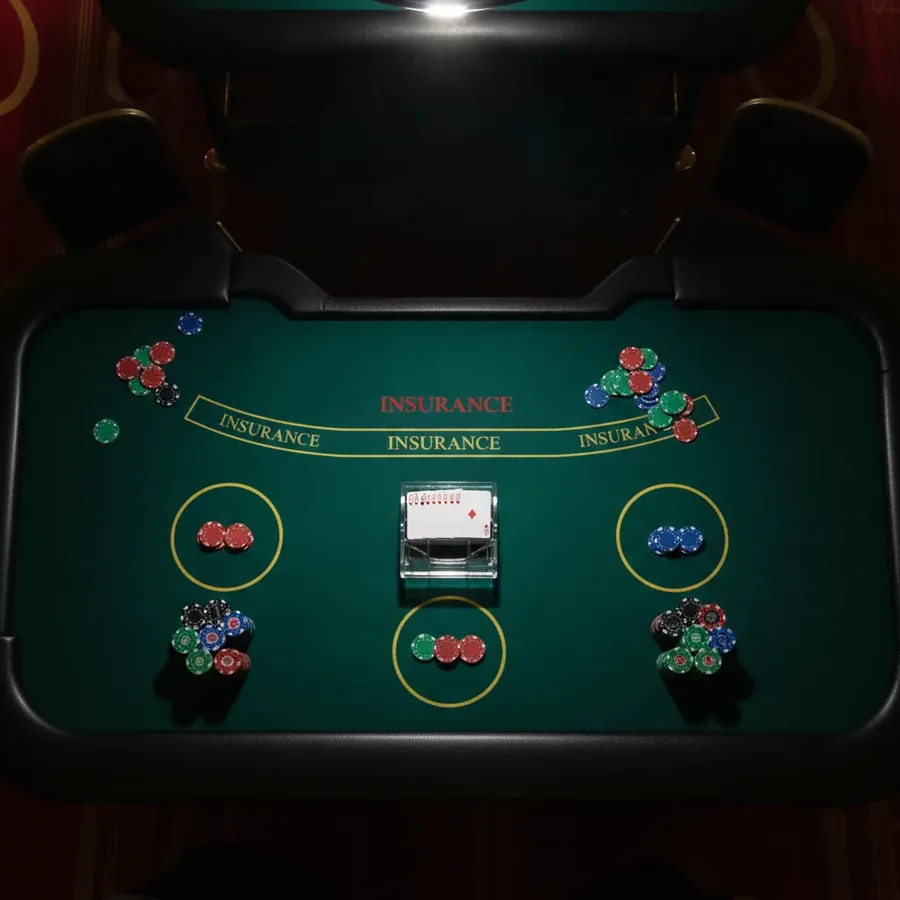
What Push Means: Stake Returns to You
A 'push' in Blackjack signifies a tie between the player's hand and the dealer's hand, resulting in the player's stake being returned. This outcome does not result in a win or a loss for the player's bet. For example, a Blackjack with a 3:2 payout means a $10 bet returns $15.
In Blackjack games such as Blackjack 6 Decks, S17, DAS, DOA, a push means your initial wager is refunded. This is different from insurance, which pays 2:1 but is generally advised against in basic strategy, as its RTP is as low as 92.53%.
When a push occurs, the player essentially gets their money back, unlike outcomes where the casino retains the stake. This neutral result ensures that the player's capital remains intact for subsequent hands, unlike a loss where the stake is forfeited.
Why Loss Progression Quickly Reaches Table Limit
Loss progression strategies, often employed in games with side bets, can rapidly escalate towards table limits due to the nature of accumulating losses. This is particularly relevant when considering side bets that do not count towards bonus turnover, such as those found in Infinite Blackjack.
While some Blackjack variants offer high RTPs, like Blackjack Liberal Vegas Strip at 99.72%, rapid betting sequences in a losing streak can quickly hit the maximum bet limits. For example, Infinite Blackjack allows bets from 1 to 5,000 EUR, a substantial range.
The consequence of a rapid loss progression is often reaching the pre-defined table limit, thus halting further betting in that sequence. This makes strategies that rely on recovering losses through increased stakes unviable once the limit is met, regardless of the game's RTP.
Side Bets don't count towards bonus turnover
Side bets in online casino games, including various Blackjack variants, typically do not contribute to meeting bonus wagering requirements. For instance, the 300% welcome bonus up to €2,000 plus 100 free spins has specific terms for turnover.
Games like Infinite Blackjack, which offers four side bets (Any Pair, 21+3, Hot 3, Bust It), have wagers placed on these side bets excluded from bonus turnover calculations. This means players need to focus on the main game to clear bonus funds.
Therefore, any wagers placed on side bets do not count towards the required turnover for bonuses. This exclusion impacts how players strategize their bonus gameplay, as only main game bets contribute to fulfilling the wagering conditions, such as the 40x requirement.
What Hole Card Means at a Live Table
At a live Blackjack table, the 'hole card' refers to the dealer's second card, which is dealt face down. This card is only revealed after the player has completed their turn or chosen to stand. Knowing the hole card is crucial for strategic decisions.
The significance of the hole card is particularly relevant in live environments like those hosting Blackjack Party or Lightning Blackjack. The dealer's face-down card impacts the player's understanding of potential dealer hands, influencing choices like hitting, standing, or splitting.
While not directly visible, the potential value of the hole card informs the player's actions. For example, if the dealer's upcard is an Ace, the player might consider insurance, though its low RTP of 92.53% makes it generally inadvisable.
Blackjack variants at a glance
| Variant | Payout | House edge | Rule | Bet range |
|---|---|---|---|---|
| Blackjack Liberal Vegas Strip (liberale Regeln, 3:2) | 99.72% | 0.28% | Günstigste Regelkombination: S17 + DAS + Resplit + Late Surrender. Standardabweichung 1,15 | Blackjack 3:2, Gewinn 1:1 |
| Blackjack Insurance / Versicherung (6–8 Decks) | 92.53% | 7.47% | Separate Nebenwette bis 50% der Hauptwette, wenn der Dealer ein Ass hat. Basisstrategie schreibt IMMER Ablehnung vor (außer Karten zählen bei True Count ≥ +3). Bei einem Deck Vorteil ≈ 5.88% | Insurance 2:1 |
| Blackjack 6 Decks, S17, DAS, DOA, Auszahlung 3:2, Basisstrategie | 99.54% | 0.46% | Dealer steht auf Soft 17; Verdopplung auf jeder Zweierkarte; Verdopplung nach Split erlaubt; keine Aufgabe. Basisstrategie ist für diesen Wert zwingend | Blackjack 3:2, normaler Gewinn 1:1, Insurance 2:1 |
| Blackjack Auszahlung 6:5 statt 3:2 (6 Decks) | 98.15% | 1.85% | Ersatz von 3:2 durch 6:5 fügt exakt +1.39 Prozentpunkte zum Vorteil des Casinos hinzu – stärker als jede andere Regeländerung. Bei $10 Einsatz zahlt Blackjack $12 statt $15. | Blackjack 6:5, Gewinn 1:1 |
| Blackjack Ein Deck, klassische Regeln, 3:2 | 99.85% | 0.15% | Weniger Decks = niedrigerer Vorteil; ein Deck gibt ca. −0.48 Prozentpunkte gegenüber 8 Decks. Oft durch 6:5 Auszahlung kompensiert. | Blackjack 3:2, Gewinn 1:1 |
| Blackjack Surrender (Late Surrender) – Regel-Effekt | n.a. (Regel-Modifikator) | −0.08 Prozentpunkte | Spieler gibt Hand nach Dealer-Blackjack-Prüfung auf, verliert die Hälfte des Einsatzes. Verbessert RTP um ca. 0.08 Prozentpunkte. Early Surrender ist wesentlich wertvoller (bis −0.6 Prozentpunkte), aber extrem selten. | Rückzahlung 50% des Einsatzes |
Ignored Basic Strategy Chart: 1 Percent Wasted
The Blackjack Ein Deck variant offers a Return to Player (RTP) of 99.85%, with a house edge of only 0.15%. This favourable RTP is achieved due to its classic rules and a single deck, which reduces the casino's advantage compared to multi-deck games. Following basic strategy is crucial for players seeking to minimise the house edge in this specific game.
However, deviating from the optimal play outlined in a basic strategy chart can significantly increase the casino's advantage. For instance, ignoring this guidance in a single-deck game can widen the house edge by approximately 0.48 percentage points. This makes adherence to the chart vital for maintaining the low 0.15% house edge.
A player's decision to ignore the basic strategy chart in Blackjack Ein Deck directly impacts their potential returns. Each deviation effectively adds to the house edge, reducing the theoretical RTP. This means less potential return on investment over the long term, even if the game itself is designed to be player-friendly.
When can you increase your bet?
In Blackjack games with a 3:2 payout for a blackjack, such as the Blackjack Liberal Vegas Strip variant, players can strategically increase their bets. This game offers a favourable RTP of 99.72% due to liberal rules like S17, DAS, Resplit, and Late Surrender. The low house edge of 0.28% makes it an attractive option for players looking to manage their bankroll effectively.
For players aiming to increase their bet size, understanding the game's RTP and house edge is paramount. For example, the Blackjack 6 Decks, S17, DAS, DOA variant has an RTP of 99.54% and a house edge of 0.46%. This still presents a relatively low margin for the casino, allowing for more aggressive betting strategies if desired.
The decision to increase a bet should always be linked to the game's profitability metrics. A game like Blackjack Auszahlung 6:5 (6 Decks) with an RTP of 98.15% and a house edge of 1.85% is less suitable for bet increases. The lower RTP and higher house edge mean increased bets are more likely to result in substantial losses.
Highroller from 500 EUR per hand
The Infinite Blackjack table, offered by Evolution, caters to high rollers with a betting range from 1 EUR up to 5,000 EUR per hand. This game provides an unlimited number of seats, ensuring availability for all players, and features four side bets: Any Pair, 21+3, Hot 3, and Bust It. The RTP for Infinite Blackjack is a competitive 99.47%.
For players betting 500 EUR or more per hand, the stakes are significantly higher, and understanding the game's RTP is crucial. Lightning Blackjack, also from Evolution, boasts an RTP of 99.56% and allows bets from 1 EUR to 2,500 EUR, with potential Lightning multipliers up to 25x. This variant offers a slightly higher theoretical return.
The Blackjack Party table, also by Evolution, offers a broader betting range from 1 EUR to 1,000 EUR and focuses on a lively atmosphere with two hosts.
Even Money only possible with Dealer Ace
The Blackjack Insurance side bet is a specific wager offered when the dealer shows an Ace. This bet pays 2:1 if the dealer has a blackjack, but it comes with a significant house advantage. In games with 6-8 decks, the RTP for this insurance bet is as low as 92.53%, meaning a substantial 7.47% house edge.
Players considering the insurance side bet should be aware of its detrimental impact on their overall RTP. For instance, the basis strategy recommends always declining this bet unless card counting indicates a true count of +3 or higher. Even in a single-deck game, the advantage from card counting on insurance is only approximately 5.88%.
The insurance bet is essentially a side wager on whether the dealer possesses a blackjack. While it offers a payout of 2:1, the probability of the dealer having a blackjack when showing an Ace is lower than the odds suggest, thus creating a steep house edge. This makes it an unfavorable bet for most players.
Card Counting at Shuffle Master Table: why it fails
Shuffle Master tables, often used in automated shuffling machines, significantly hinder card counting strategies. These machines continuously shuffle the deck or decks after each hand, or very frequently, making it virtually impossible for a card counter to gain a statistical advantage. The constant reshuffling resets the card composition, negating any advantage built by tracking removed cards.
The core principle of card counting relies on observing cards that have been played to predict the composition of future hands. When a Shuffle Master constantly reintroduces cards into play, this predictive element is eliminated. Games like Blackjack Ein Deck, with a very low house edge of 0.15%, are already difficult to beat, and Shuffle Master tables make it even more so.
Therefore, attempting to employ card counting techniques at a Shuffle Master table is largely futile. The casino's advantage is maintained by the continuous shuffling, which effectively neutralizes the information a player might gather. While other games, such as Blackjack 6 Decks with a 0.46% house edge, might be susceptible to card counting, Shuffle Master technology prevents this.
Statistics display saves the last 100 rounds
The casino platform presents a statistics display that tracks the outcomes of the last 100 rounds. This feature allows players to review recent game history without needing to manually record their sessions. Understanding recent trends can sometimes inform player decisions, although it does not alter the inherent probabilities of the games. This record-keeping is a standard function across many online gaming platforms.
For instance, in Blackjack, specific rules significantly impact the house edge. A rule where Blackjack pays 6:5 instead of the standard 3:2 increases the house advantage by precisely 1.39 percentage points. This means for every $10 wagered, a Blackjack payout would yield $12 instead of $15, directly reducing player returns.
This detailed historical data is valuable for players who prefer a more analytical approach to their gaming. While the statistics display covers the last 100 rounds, it's important to remember that RTP figures, such as the 99.54% for Blackjack with specific rules, are theoretical long-term averages and not guaranteed for a limited number of rounds.
Splitting Eights vs Standing on 16
In Blackjack, the decision to split eights when facing a dealer's ten-value card is a crucial strategic choice. This strategy is based on minimizing losses, as two eights do not form a strong starting hand. Splitting eights is a key element of basic strategy aimed at improving player outcomes.
Conversely, standing on a total of 16 against a dealer's upcard of 10 or higher is another fundamental rule in basic strategy. This decision is made because the probability of busting is high when hitting a 16, and the dealer's upcard suggests a strong potential hand for the house.
The optimal strategy for Blackjack, such as the variant with RTP 99.54% and a house edge of 0.46%, mandates specific actions like splitting eights and standing on 16. Adhering to this basis strategy is considered essential for achieving the lowest possible house advantage in any given Blackjack game.
Bonus conditions often exclude Blackjack completely
The welcome bonus of 300% up to €2,000, along with 100 free spins, comes with specific terms and conditions that can affect game eligibility. It is common for online casinos to restrict or completely exclude certain games from contributing to bonus wagering requirements. Players must always review these conditions before making a deposit.
A significant detail regarding the welcome bonus is the game contribution towards the wagering requirement. While Slots contribute 100%, Tischspiele (Table Games) typically contribute only 10%. This means that Blackjack, as a table game, will contribute significantly less to clearing the bonus compared to slot machines.
Therefore, for players interested in Blackjack, the bonus conditions are particularly important to examine. If Blackjack is completely excluded from wagering, then the bonus funds cannot be used to clear the bonus, effectively making the welcome offer less relevant for Blackjack enthusiasts.
Unlimited seats via a split dealer hand
Some live Blackjack variants offer an unlimited number of seats at the table, addressing a common limitation in traditional live dealer games. This is often achieved through innovative game design, such as the Infinite Blackjack variant by Evolution, which ensures all players have a seat regardless of demand.
However, games like Infinite Blackjack and Lightning Blackjack, both featuring unlimited players, do offer multiple side bets. Infinite Blackjack includes side bets like Any Pair, 21+3, Hot 3, and Bust It.
Infinite Blackjack, with an RTP of 99.47%, provides a solution for players who experience lengthy wait times for a seat at popular live Blackjack tables. Lightning Blackjack, boasting an RTP of 99.56%, also offers unlimited player capacity, enhanced by multipliers up to 25x on winning hands.
One Deck vs Eight Decks in House Edge
The number of decks used in a Blackjack game significantly influences the house edge. A game utilizing only one deck offers a considerably lower house advantage compared to games that use multiple decks. For example, a single deck can reduce the house edge by approximately 0.48 percentage points relative to an eight-deck game.
The Blackjack variant 'Blackjack Ein Deck, klassische Regeln, 3:2' boasts an impressive RTP of 99.85%, resulting in a house edge of just 0.15%. This low house edge is a direct consequence of using fewer decks, making it a highly player-favorable option, provided other rules remain standard.
Conversely, a Blackjack game using six to eight decks, such as the 'Blackjack Auszahlung 6:5 statt 3:2 (6 Decks)', shows a higher house edge of 1.85% with an RTP of 98.15%. This increase is often exacerbated by rules like a 6:5 payout for Blackjack, which is less advantageous than the standard 3:2.
Contact
Live - online chat
Banking





Providers










1Xslots Casino 2026